

TEL:+86 010 60405689
In large public buildings, cultural and tourism special-shaped roofs, transportation hubs, exhibition venues and modern factory projects, aluminum magnesium manganese panels have become a mature mainstream material in metal enclosure systems. With the comprehensive advantages of light weight, high strength, weather resistance and corrosion resistance, bendable forming and long service life, the aluminum magnesium manganese standing seam roof system breaks the modeling limitations of traditional roof materials. It can adapt to complex curved surfaces, large-span roofs and facade decoration requirements, and is a key enclosure board focused by architects, structural engineers and engineering purchasers.
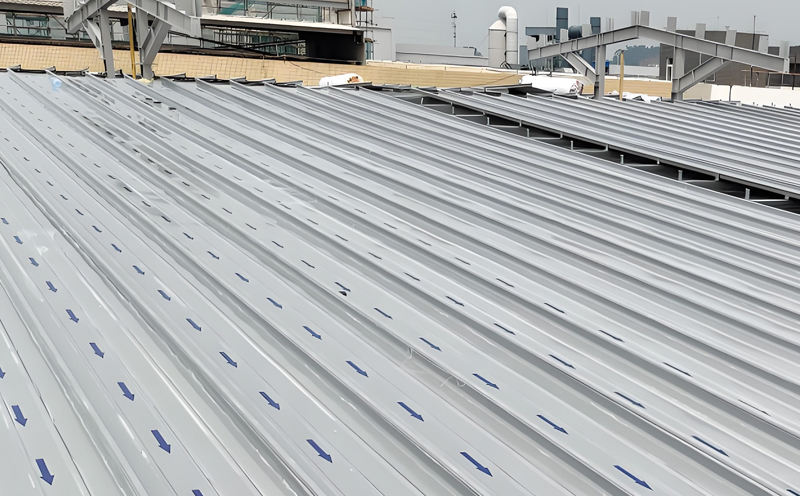
Aluminum magnesium manganese panels are processed from aluminum-magnesium-manganese alloy substrates. The most commonly used grades on the market are the 3004 and 3005 series. Magnesium is added to the substrate to improve the strength of the plate, and manganese optimizes the corrosion resistance of the material. Different from ordinary aluminum plates and color steel plates, the alloy formula enables the plate to maintain good ductility while possessing stable mechanical properties. Under the same area, the self-weight of aluminum magnesium manganese panels is much lower than that of steel plates, which can effectively reduce the load on the main steel structure and lower the foundation cost. It is especially suitable for large-span and special-shaped buildings.
According to the mainstream panel classification, the aluminum magnesium manganese enclosure system is mainly divided into two categories: YX65 high standing seam system and YX25 low standing seam system.
The YX65 high standing seam aluminum magnesium manganese panel has a standing height of 65 mm with tightly occluded seams and outstanding waterproof performance. It is mostly used for the main roof system, suitable for projects with high requirements for waterproofing and wind pressure resistance such as stadiums, high-speed railway stations and exhibition centers. It supports on-site fan-shaped arc bending, positive and reverse arc bending processing, and can easily realize single-curved and double-curved special-shaped surfaces.
The YX25 low standing seam aluminum magnesium manganese panel has a standing height of 25 mm with simple and neat lines. It is more used for facade curtain walls, decorative walls, canopies and small-sized roofs. It presents delicate visual effects and is widely used in cultural and tourism supporting facilities, commercial street renovation and building facade decoration.
The surface coating is the core factor determining the long-term weather resistance of aluminum magnesium manganese panels. Common coatings on the market include PE polyester coating and PVDF fluorocarbon coating. PE polyester coating can meet the requirements for ordinary factory buildings, indoor and sheltered working conditions. For outdoor long-term exposure, coastal salt spray areas and regions with strong ultraviolet rays, PVDF fluorocarbon coating is preferred. It has stronger resistance to fading, chalking and corrosion, greatly extending the service life of the roof. The coating adopts the roller coating process with uniform paint film and stable adhesion, reducing the risk of paint peeling in the later stage.
A complete aluminum magnesium manganese roof is not merely a single panel, but a complete system project. In addition to the face sheet, supporting accessories are equally critical: supports, thermal insulation cotton, waterproof breathable membranes, vapor barriers, flashing trim panels, end caps, sealing strips, lightning protection accessories and other components. Each component affects the waterproofing, thermal insulation, wind uplift resistance and lightning protection performance of the roof. Many roof leakage problems in projects are not caused by the panels themselves, but by improper arrangement of supports, flashing details and node treatment, which are key points to be controlled in engineering implementation.
Many purchasers and designers tend to fall into several misunderstandings during initial selection. First, they simply compare prices while ignoring alloy grades. Low-cost panels may adopt pure aluminum or low-alloy substrates with substandard strength and corrosion resistance. Second, they only check the panel thickness while ignoring the coating type and coating thickness. Using ordinary polyester panels to replace fluorocarbon panels for outdoor projects will lead to fading in a short time. Third, they neglect the supporting system, purchasing only aluminum magnesium manganese face sheets and arbitrarily selecting non-standard accessories for flashing and supports, leaving hidden dangers for the project. Fourth, they ignore on-site processing capacity. Special-shaped roofs require mobile crimping equipment on site, and factory prefabricated panels are difficult to fit the curved dimensions on site.
Beijing Yongcheng United New Plate Co., Ltd. has been deeply engaged in the metal enclosure industry for many years. It has long undertaken the supply of aluminum magnesium manganese roof panels and metal enclosure systems as well as technical docking services. It has served various public buildings, cultural and tourism projects and factory renovation projects. In actual project communication, we will match suitable alloy grades, panel types, coating schemes and supporting system node solutions according to the local climatic conditions, architectural shapes, wind and snow pressure parameters and budget range of the project, providing implementable technical references for design, procurement and construction teams.
The application scope of aluminum magnesium manganese panels continues to expand: large stadiums, airports, high-speed railway stations, exhibition centers, libraries and other public buildings; cultural and tourism towns, landscape buildings and special-shaped landscape roofs; steel structure factory buildings, warehouse roofs and exterior wall renovation; facades of commercial complexes, connecting corridor canopies, cornice decorations and so on.
Compared with other roof materials, the advantages of the aluminum magnesium manganese metal enclosure system are concentrated: light self-weight, capability to form special-shaped curved surfaces, corrosion and weather resistance, reduced water leakage risk due to non-penetrating standing seams, simple later maintenance and high recycling rate, which makes it a green building material. Of course, it also has applicable limits. The cost, environment and building functions need to be comprehensively evaluated in the early stage of the project, and it cannot replace all enclosure materials in all cases.
In summary, the aluminum magnesium manganese panel is not a single decorative plate, but a systematic metal enclosure solution. Only by properly selecting the substrate grade, matching the panel type, choosing the coating, equipping supporting nodes and controlling construction quality can the material performance be fully exerted and the long-term stable operation of the building roof be guaranteed. In the early stage of the project, it is recommended to communicate with material suppliers in advance about technical parameters, processing capacity and supporting schemes to avoid selection risks.
E-mail:yongchenglianhe@outlook.com

Links: Aluminum magnesium manganese plate